What is MMS?

MMS stands for Multimedia Messaging Service. MMS was developed in 1984 as the advanced version of SMS.  MMS was built using the same technology as SMS to allow users to send multimedia content such as pictures, videos, audio, contacts, GIFs, and more. MMS also improves upon the SMS character count by allowing up to 1,600 characters per message (this is 10 times the character limit of SMS). Both SMS and MMS rely on a mobile network infrastructure, as opposed to a cellular network infrastructure.

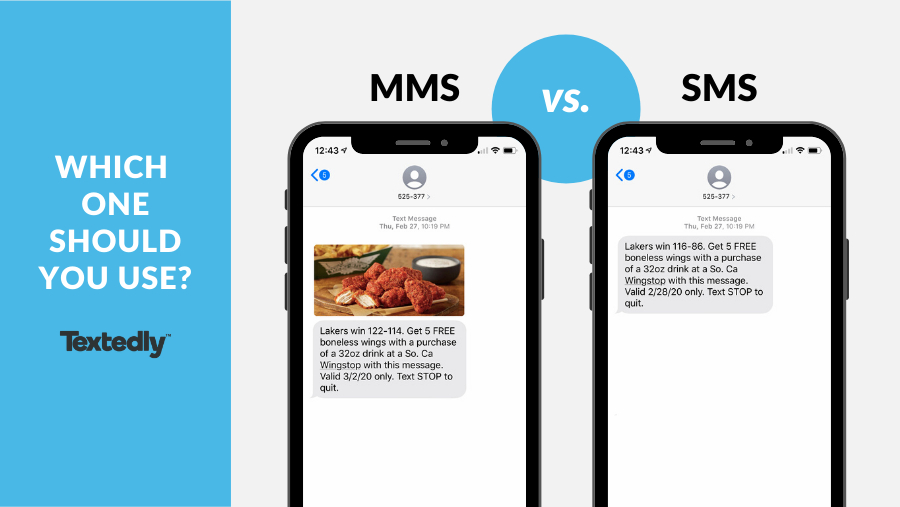
The photo to the right helps to demonstrate how MMS is beneficial from a marketing standpoint. SMS can only send text and links, but MMS allows for an image to be sent which can capture a potential customers attention much more effectively

How Secure is MMS?

MMS messages, like SMS, are generally not considered to be as secure as some other forms of communication. MMS messages are transmitted over cellular networks and may be susceptible to interception, similar to traditional SMS messages. However, the level of security depends on various factors, including the cellular network's encryption standards and the specific implementation by the service provider. While some networks may use encryption to protect the content of MMS messages during transmission, the level of security might not be as robust as end-to-end encryption provided by some messaging apps for text-based communication (which you can learn more about in RCS, Platforms, and Cryptography) and It's important to note that MMS messages can be vulnerable to interception or hacking, especially if sent over unsecured Wi-Fi networks. For the highest level of security, we recommend using communication methods that use end-to-end encryption methods when possible.
img: http://tinyurl.com/mt84d9u4